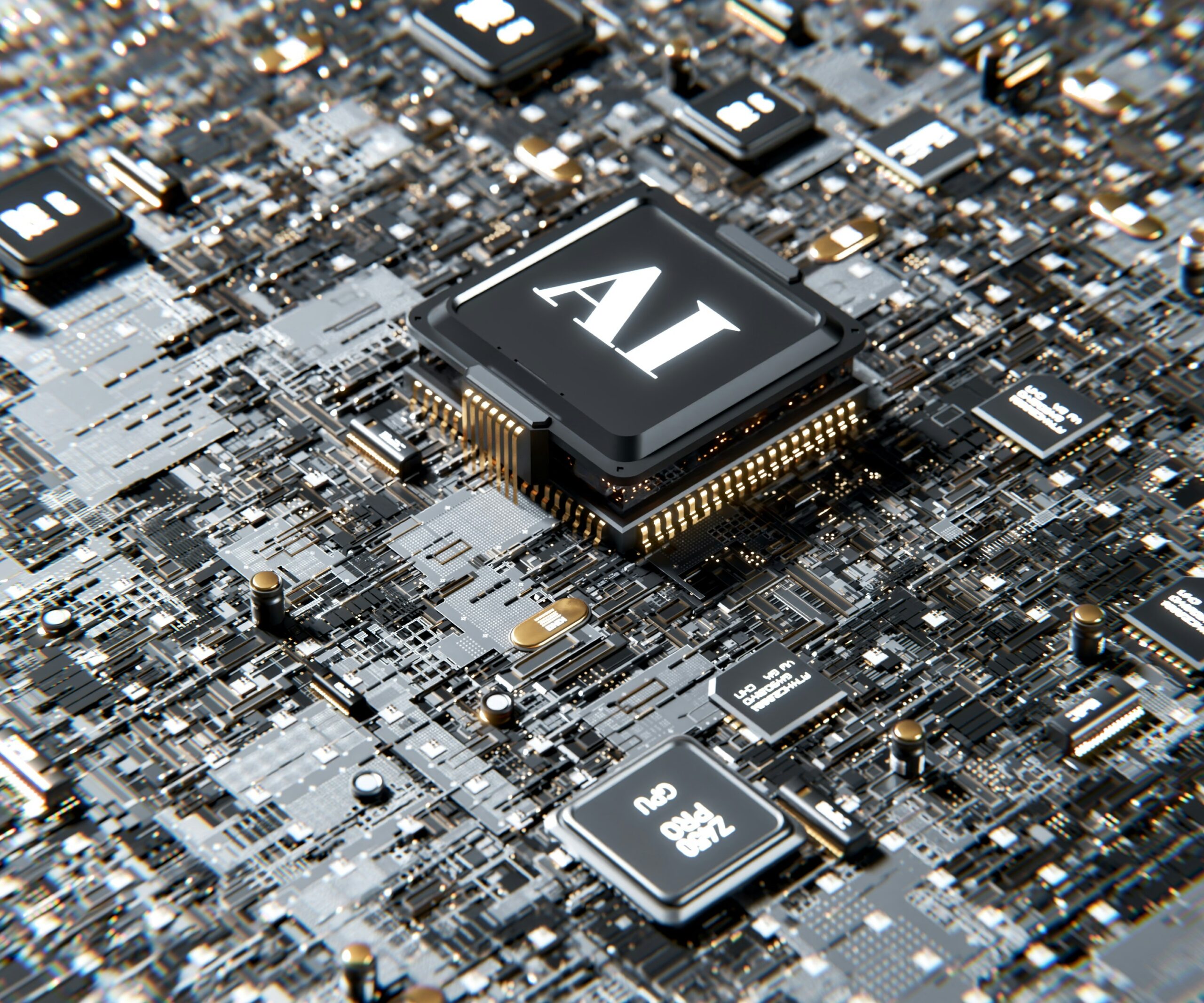
Emerging Technologies – Artificial Intelligence and Virtual Reality
Education is undergoing a massive transformation as emerging technologies like Artificial Intelligence (AI), Virtual Reality (VR), and Augmented Reality (AR) become integrated into classrooms and online platforms. These tools are not simply add ons, they are reshaping how students learn, how teachers teach, and how institutions imagine the future of knowledge distribution!
Artificial Intelligence in Education – AI is often described as the “invisible hand” guiding modern education. Its applications range from personalized learning platforms to predictive analytics that help educators identify struggling students before they fall behind.
Personalized Learning Pathways
- Adaptive Content Delivery: AI systems analyze student performance in real time and adjust the difficulty, pace, and type of content. For example, platforms like DreamBox (math) or Duolingo (languages) use AI to tailor lessons to each learner’s strengths and weaknesses.
- Learning Recommendations: AI can break down large topics into smaller, digestible modules, recommending specific exercises or readings based on gaps in knowledge.
Intelligent Tutoring Systems
- AI tutors simulate human tutoring by providing hints, explanations, and feedback. For example, Carnegie Learning’s MATHia uses AI to guide students through problem-solving, offering step-by-step feedback. The benefit of this is that students receive individualized support even outside classroom hours, reducing reliance on teacher availability.
Automated Assessment and Feedback
- AI can grade multiple-choice, short-answer, and even essay questions using natural language processing
- AI highlights areas for improvement, suggesting resources or exercises. Turnitin’s AI-powered tools not only detect plagiarism but also provide writing feedback on clarity and structure. This gives students immediate actionable insights that they can immediately apply
Accessibility and Inclusive Education
- AI-driven translation tools allow students to access materials in their native language. For example the website Language Weaver allows users to translate materials from one language to another
- Speech-to-text and text-to-speech tools support students with hearing or visual impairments. Further, AI can adapt content presentation for learners with ADHD, dyslexia, or autism, offering alternative formats and pacing. Microsoft’s Immersive Reader uses AI to help students with reading difficulties by adjusting text spacing, highlighting syllables, and reading aloud.
Learning Analytics
- In terms of early intervention AI can analyze attendance, grades, and engagement data to predict which students are at risk of dropping out. Georgia State University uses predictive analytics to increase graduation rates by identifying at risk students and offering targeted support. They identify at risk behaviours and have advisers respond to alerts by intervening in a timely manner to get students back on track.
Virtual Reality (VR) in education refers to the use of computer‑generated, immersive environments that allow learners to interact with simulated objects, scenarios, or spaces as if they were real. Sümer & Vaněček (2025) describes VR as “a computer‑generated environment where scenes and objects appear to be real, immersing the user in their surroundings” and highlights its growing role in higher education for enhancing both STEM and humanities learning. This technology enables students to “step into” lessons whether that be exploring a human cell, conducting a physics experiment, or walking through historical sites which makes abstract concepts more tangible and engaging!
Medical Education
- VR simulators provide medical students with a safe, controlled environment to practice delicate procedures such as tendon suturing or continuous suturing. Unlike traditional cadaver labs or limited clinical opportunities, VR allows repeated practice without risk to patients. Students can refine their motor skills, learn proper sequencing, and build confidence before entering real operating rooms. A randomized trial by Gan et al., (2023) found VR tendon suturing significantly improved exercise time, operation flow, and knowledge compared to traditional methods.
- One of the most challenging aspects of medical education is mastering the complexity of human anatomy. VR enables learners to explore highly detailed 3D models of the body, zooming into organs, tissues, and systems in ways that static textbooks or 2D diagrams cannot replicate. Students can rotate structures, view them from multiple angles, and even simulate physiological processes like blood flow or neural signaling. A review by Tene et al., (2024) concluded that VR and AR improve specific competencies in healthcare professionals, especially in anatomy comprehension. By making abstract structures tangible, VR helped the students develop spatial awareness and a deeper understanding of how systems interconnect, which is critical for clinical practice.
- Beyond technical skills, medical education also requires cultivating empathy and communication. VR experiences allow students to “step into the shoes” of patients living with conditions such as dementia, depression, or mobility impairments. For example, simulations can replicate the sensory and cognitive challenges faced by individuals with dementia, helping future doctors understand the frustration and confusion patients may feel. For example, A 2025 article by Kaggwa et al highlighted VR’s potential to enhance empathy and patient interaction competencies. Their study showed that students who engaged in VR empathy training reported greater sensitivity to patient needs and improved communication skills. This suggests VR can play a vital role in shaping more compassionate, patient centered healthcare professionals.
Engineering Education
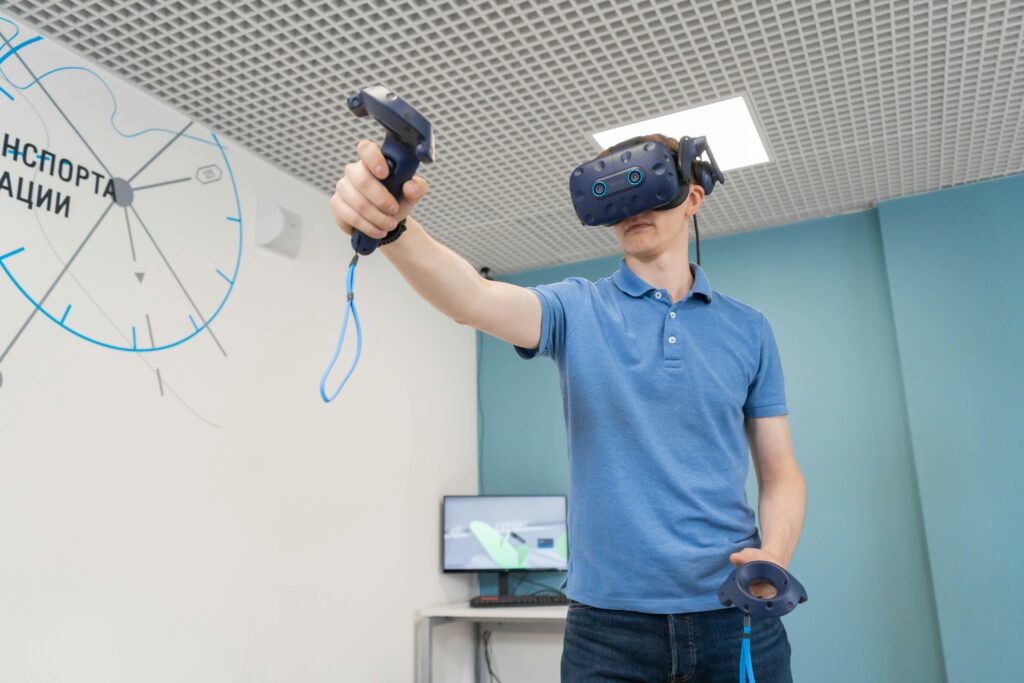
- VR enables engineering students to design, test, and refine prototypes virtually, reducing costs and risks. A study by Halabi (2019) demonstrated that VR prototyping reduced development time and costs while boosting creativity and problem-solving skills. The study found that using virtual reality for prototype testing significantly improved the learning experience of engineering students by reducing development time and material costs, while simultaneously boosting creativity and problem‑solving skills. Students were able to design and refine prototypes in immersive 3D environments, which encouraged experimentation and iterative thinking without the constraints of physical fabrication. The research highlighted that VR not only provided a safe and cost‑effective alternative to traditional prototyping but also fostered collaboration, as teams could interact with shared virtual models to enhance communication and collective decision‑making
Online Learning with AI and VR
AI driven platforms like DreamBox or Coursera’s adaptive modules analyze student performance in real time. They adjust lesson difficulty, recommend targeted exercises, and even predict when a student is likely to disengage. This means learners in online settings can receive individualized pathways without needing constant teacher oversight. The benefit to this is that students in remote areas or with diverse learning needs gain access to tailored support that would be difficult to provide in large classrooms. VR labs replicate environments like chemistry labs, medical operating rooms, or engineering workshops. During the COVID-19 pandemic, universities used VR to let students conduct experiments remotely, ensuring continuity of learning.
Challenges Online
- Not all students have access to VR headsets or high speed internet, which can exacerbate inequality
- AI tutors and VR simulations cannot fully replicate peer discussion or teacher mentorship, which are critical for social learning